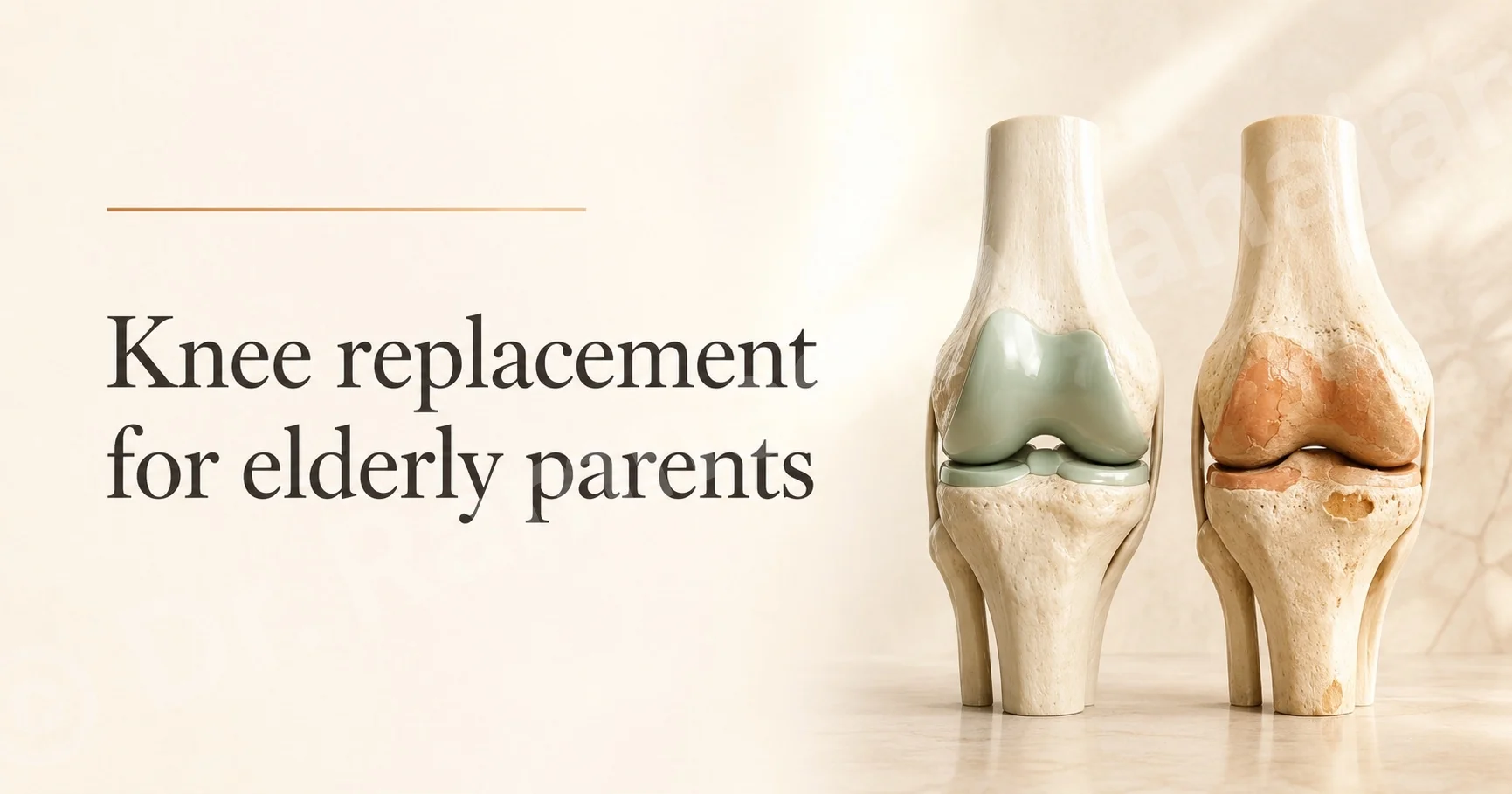
What decides an operation when a childhood knee injury catches up in a person's eighties?
Dr. Mahajan is Chairman Orthopaedics, Joint Replacement & Chief Robotic Joint Replacement at Max Smart Super Speciality Hospital, Saket.
A man in his eighties, still very active, came to Dr Ramneek Mahajan with a left knee that had become hard to walk on.
How did it start?
The patient says that when he was a child playing football, the cartilage in his left knee, the tough tissue that cushions the bones inside a joint, slipped and was removed, as was done in those days. In the last few years this made it difficult to walk.
Which doctors did the family see first?
A family member says they met some doctors and researched which procedure to follow.
What did this surgeon say had to be done, and why?
The patient says this surgeon saw the X-rays and said the knee needed replacing.
Dr Mahajan says the patient, who is still very active, was positive and wanted the operation: the knee was affecting his quality of life, and he still wanted to go to the office, so the decision to operate was clear. A CT scan, a detailed X-ray that builds pictures of the inside of the body, was done and a working plan made. The new joint was then placed, with the help of computers and robotics, in the position the surgeons judged right. In a robot-assisted knee replacement, the surgeon uses a robotic arm to guide the cuts.
What changed after the operation?
The patient says the X-rays after the operation show his knee, which was bent before, is now straight.
Dr Mahajan says a patient's positive attitude helps recovery, and is the first thing anyone having a knee replacement or another major operation needs.
What should a patient ask before a knee replacement?
This is one man's story, not a promise: what an operation can do for you depends on your own case.
Ask what your X-rays show, and how the new knee will be lined up during the operation.
Ask what you can do yourself to help your recovery.
What this case teaches
There are no absolute age limits for a knee replacement, the American Academy of Orthopaedic Surgeons says.
People aged 80 and over gained as much in knee function and satisfaction as those aged 65 to 75, a 2025 study found.
In that 2025 study, people aged 80 and over stayed in hospital about half a day longer on average.