Book an appointment
ROBOTIC OR CONVENTIONAL

You are considering a robotic joint replacement.

This page helps you decide whether it is the right choice.

Is robotic surgery right for my parent?

Robotic surgery suits many people who need a knee or hip replaced. Whether it is right for your parent depends on their joint, their health, and what matters most to them - not on the technology alone.

Is a machine doing the surgery?

Your surgeon performs the operation. The robot is a tool in the surgeon's hands, guiding each step to a plan made for your parent's joint.

Is robotic surgery worth the extra cost?

Robotic surgery usually costs more than conventional surgery, the kind done without a robot. Whether that difference is worth it for your family is a fair question - this page sets out what the extra cost pays for, so you can decide for yourself.

Will this page actually help us decide?

It explains

  • what the robot actually does in the operating theatre

  • what it means for your parent's recovery

  • what the higher cost buys

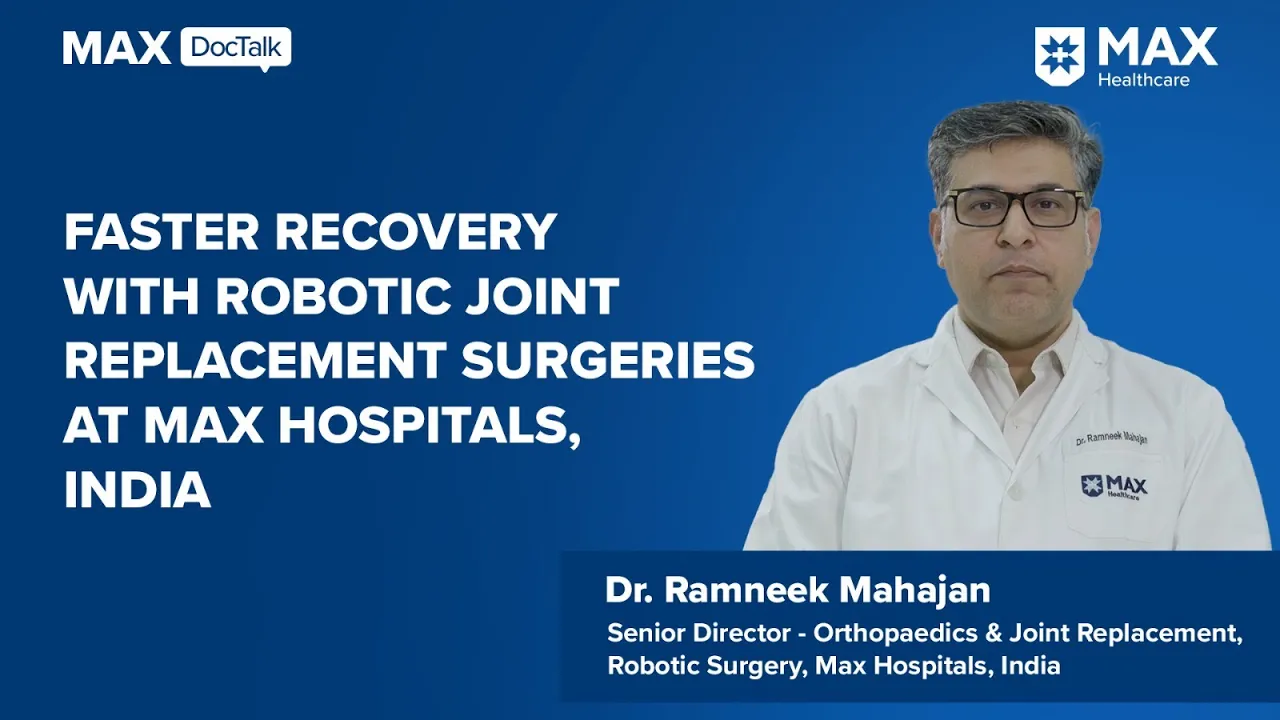
Dr. Ramneek Mahajan on whether robotic surgery is really needed - in his own words (1 min watch).

Do I Need Robotic Surgery? Here's the Truth
Robotic surgery
Do I Need Robotic Surgery? Here's the Truth

By the end, you should know whether robotic is right for your parent - or whether conventional surgery serves them just as well.

How does robotic surgery work?

If the surgeon is doing the operation, what is the robot for?

Three things - it plans the operation, it guides each step, and it keeps every cut inside that plan. The surgeon leads all of it.

In the operating theatre, the robot guides
It starts with your parent's own joint

A CT scan becomes a 3D model of your parent's knee or hip, and the surgeon plans the new joint part on it - its size, its position, its angle.

It guides every cut to the plan

The surgeon makes the cuts by hand; the robotic arm keeps each one within the limits the surgeon has set.

The surgeon stays in control

The robot follows a plan; it does not make one. It measures and steadies each step - the judgement, and the decisions, stay the surgeon's.

Watch how the robot builds the plan and guides each cut, from CT scan to the operating theatre. (3 min)

Whether it changes your parent's recovery is a separate question - and honestly, the answer is not the same for everyone.

What does recovery look like?

What will recovery actually look like for my parent?

Robotic surgery changes the operation, not the weeks that follow it. There is still healing, still physiotherapy, still effort - and it goes differently for every parent.

Recovery is work, not a shortcut

A new joint has to settle in, and the rehabilitation afterwards does much to shape how much mobility your parent gets back. The robot can make the surgery more precise; it cannot do the recovery for them. Physiotherapy is the biggest part of it within your control.

What the robot changes, and what it does not

The robot's job is to place the new joint accurately and in good alignment - which is mostly about how the joint holds up over the years, not how fast recovery goes. Whether robotic makes the recovery itself easier is not settled: some patients are up and moving comfortably in the early days, but that owes as much to modern anaesthesia and gentle early movement as to the robot.

Early days

First steps, usually with a walker and someone alongside.

The weeks after

Walking further and more steadily, with physiotherapy leading.

Throughout

The pace is your parent's own - their age, health, and whether one joint or both.

Dr. Ramneek Mahajan on what robotic surgery changes about recovery, and what it does not (under 1 min).

What matters here is simpler: the robot can help with the operation, but the recovery is still your parent's to do.

Why Dr. Mahajan?

Why Dr Ramneek Mahajan for robotic surgery?

One good sign in a robotic surgeon is simple: other surgeons come to him to learn it. His record, and the press, show why.

2,000+ robotic joint replacements
Life is Mobility & Mobility is Life
Chairman Orthopaedics, Joint Replacement & Chief Robotic Joint Replacement
  • Max SMART Saket
  • Mahajan's GK-1, New Delhi
18,000+
joint replacements
2,000+
robotic cases
23+
years
12+
international faculty
MAKO ProctorTrains surgeons on robotic
Only IndianOn the Direct Anterior Approach launch faculty
First in DelhiMAKO robotic joint replacement
ChairmanSMART Conclave India 2025
Life is Mobility & Mobility is Life
Chairman Orthopaedics, Joint Replacement & Chief Robotic Joint Replacement
  • Max SMART Saket
  • Mahajan's GK-1, New Delhi
18,000+
joint replacements
2,000+
robotic cases
23+
years
12+
international faculty
MAKO ProctorTrains surgeons on robotic
Only IndianOn the Direct Anterior Approach launch faculty
First in DelhiMAKO robotic joint replacement
ChairmanSMART Conclave India 2025
DR MAHAJAN ROBOTIC WORK IN THE NEWS

Hindustan Times

his robotic hip programme and Mako series

Business Today

robotic surgery, with the honest trade-offs

Training

The robotic training centre where he teaches visiting surgeons

What do families say about robotic surgery experience?

Does it actually help? Hear it from people who chose it.

Not our claims - their own recordings. Families who weighed the same question and went ahead, on the knee and the hip.

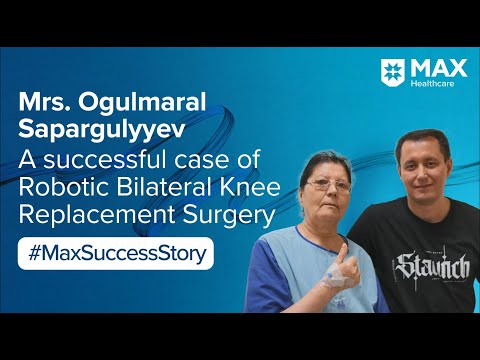
Ogulmaral Sapurgulyyev
Robotic bilateral knee
Ogulmaral Sapurgulyyev
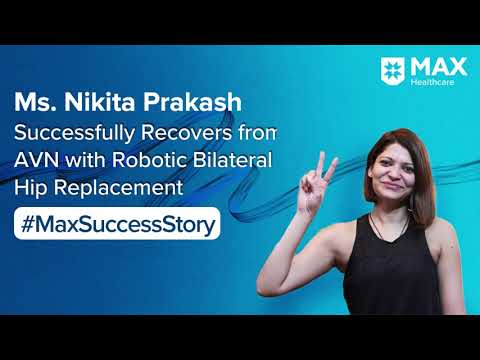
Nikita Prakash
Robotic bilateral hip
Nikita Prakash
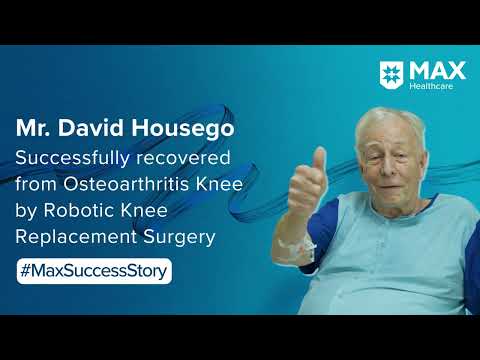
David Housego
Robotic knee · MAKO
David Housego
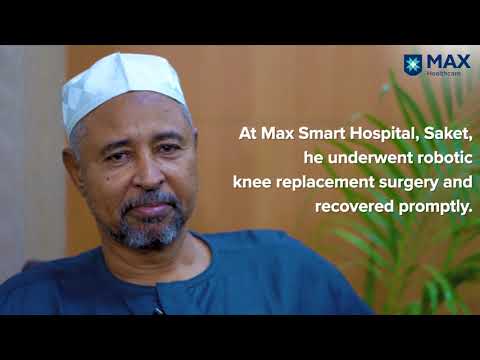
Aminu Ademut
Robotic knee
Aminu Ademut

These videos are published on Max Healthcare's official YouTube channel. Each patient's experience is unique - outcomes depend on individual health, disease characteristics, and clinical factors. These accounts are not a guarantee of results.

What does the journey look like?

What actually happens, from the first visit onwards?

  1. Consult and plan

    Your part: bring the scans and history. From these, the team builds the 3D surgical plan.

  2. Pre-op checks

    A few health checks and clearance. Your part: line up some help at home for the early weeks, and time off work.

  3. Day of surgery

    The plan guides the robotic arm within set limits, and the surgeon performs the operation.

  4. Going home

    Most people are up with support soon after, need only a short hospital stay, and head home once the team clears them.

  5. Recovery and follow-up

    Physiotherapy is arranged from the start, and follow-up visits check progress at set points.

What's the cost and value?

What does it cost, and is it worth it?

There's no single price - every case is different. Here's what shapes it, and how the team keeps it clear for you.

What shapes the cost

The implant chosen for the joint

Tests before surgery

The robotic technology itself

If infection is the cause

When infection is the reason, it usually has to be cleared before a new joint can go in - often as two operations with a wait in between, rather than one. That makes it the longest path, and usually the most expensive. If infection is a possibility, plan for it early.

What insurance covers, and what varies

Most of the hospital package for a revision is set by insurance. The one part that varies is the implant - what the joint needs (how much bone is left, the ligaments) differs from case to case, so its cost does too.

If you have health insurance, the practice's insurance team helps you check all of this before admission:

  • Your policy benefits - what your plan covers for a revision.

  • Cashless eligibility - whether the hospital can bill your insurer directly.

  • Any out-of-pocket cost - what, if anything, you would pay yourself.

That way, you know where you stand before you decide.

Cost is a real part of this decision. Ask for the full picture early, so the money is something you can plan for - not something that catches you later.

Frequently Asked Questions (FAQs)

Robotic joint replacement is not better surgery in the dramatic sense; it is more precise surgery. The CT-based 3D plan defines implant size, angle, and rotation for your specific joint before the procedure starts. The robotic arm enforces that plan during cutting, with sub-millimetre accuracy and minimal soft-tissue handling. Over years, better implant positioning translates to longer implant life, lower revision risk, and a cleaner early recovery.

No, robotic joint replacement is an established technology. The MAKO platform has been in clinical use since 2005, with data and outcomes accumulated across major centres worldwide. Dr Ramneek has performed over 2,000 robotic procedures. The implants themselves are the same FDA and CDSCO-approved devices used in conventional surgery; the robot is a precision tool that helps position them more accurately.

Yes, there is a cost premium for robotic joint replacement covering the CT scan, the robotic-platform charge, and the dedicated workflow. The exact difference varies by hospital and insurance coverage. We discuss specific numbers at consultation along with what insurance typically covers. For most patients the choice is value-based: the precision benefit over a 15 to 25 year implant life is the consideration, not the headline price difference.

The surgeon controls every cut. The robot is a precision tool in the surgeon's hand, not an autonomous machine. Dr Ramneek defines the plan, holds the robotic arm, and decides every movement during surgery. The robot's role is to keep cuts inside the planned zone using a haptic feedback system - it will not let the arm cross the planned boundaries. The surgeon's judgement, not the machine, is what matters.

We use MAKO robotic-assistance for partial knee replacement when knee anatomy is unusual, when there has been prior knee surgery, or when smaller deformity demands tight tolerance - and especially for younger patients where small precision differences add up over decades of wear. Before surgery, a CT scan of your knee becomes a 3D plan; during surgery, the robotic arm guides each bone cut to match the plan exactly. The surgeon stays in full control - the arm just prevents the cut from straying. Precision matters more in a partial than a total because the implant is smaller and even small malalignments load it harder.

The MAKO robotic system places the cup within a few degrees of the planned inclination and anteversion. Published studies show robotic-assistance reduces alignment outliers compared to conventional manual instrumentation, particularly in cup orientation and leg length. The robotic arm holds the reamer and the cup impactor within a haptic tunnel - if the surgeon tries to go beyond the planned depth or angle, the arm stops. This precision matters for dislocation rates, leg-length symmetry, and long-term wear. The surgeon hand stays in control throughout - the arm is a guide, not a substitute. No part of the operation is automated.

Yes. Conventional knee and hip replacement remains a valid option and is performed at our centre. Both surgeries use the same implants and produce good outcomes in experienced hands. The conversation at consultation is about whether the robotic precision benefit is worth the additional cost for your specific case. We make that decision together; the choice is yours.

Can I safely wait?

The questions worth asking before you decide - and when waiting is the right call, and when it is not.

Before we meet

What should I expect, step by step?

The whole path, stage by stage - getting ready, the day itself, recovery, physio, life after.

Patient journey

Where did he train?

Fellowships, years in practice, and international experience

Credentials and experience

Where to See Dr. Mahajan

Wherever you come, you see him personally.

Max SMART Super Speciality Hospital
Saket, New Delhi
Monday to Saturday
10:00 AM to 4:00 PM
See location on Google Maps
See clinic details
Mahajan's Knee & Hip Centre
Greater Kailash 1, New Delhi
Wednesday & Friday
4:00 PM to 6:00 PM
See location on Google Maps
See clinic details

Next 3 Days

11 August, TuesdayToday
Available at Saket
10:00 AM to 4:00 PM
12 August, Wednesday
Available at Saket
10:00 AM to 4:00 PM
Available at GK-1
4:00 PM to 6:00 PM
13 August, Thursday
Available at Saket
10:00 AM to 4:00 PM
Where to See Dr. Mahajan

Wherever you come, you see him personally.

Max SMART Super Speciality Hospital
Saket, New Delhi
Monday to Saturday
10:00 AM to 4:00 PM
See location on Google Maps
See clinic details
Mahajan's Knee & Hip Centre
Greater Kailash 1, New Delhi
Wednesday & Friday
4:00 PM to 6:00 PM
See location on Google Maps
See clinic details

Next 3 Days

11 August, TuesdayToday
Available at Saket
10:00 AM to 4:00 PM
12 August, Wednesday
Available at Saket
10:00 AM to 4:00 PM
Available at GK-1
4:00 PM to 6:00 PM
13 August, Thursday
Available at Saket
10:00 AM to 4:00 PM
Where to See Dr. Mahajan

Wherever you come, you see him personally.

Max SMART Super Speciality Hospital
Saket, New Delhi
Monday to Saturday
10:00 AM to 4:00 PM
See location on Google Maps
See clinic details
Mahajan's Knee & Hip Centre
Greater Kailash 1, New Delhi
Wednesday & Friday
4:00 PM to 6:00 PM
See location on Google Maps
See clinic details

Next 3 Days

11 August, TuesdayToday
Available at Saket
10:00 AM to 4:00 PM
12 August, Wednesday
Available at Saket
10:00 AM to 4:00 PM
Available at GK-1
4:00 PM to 6:00 PM
13 August, Thursday
Available at Saket
10:00 AM to 4:00 PM

Dr. Ramneek Mahajan is Chairman Orthopaedics, Joint Replacement & Chief Robotic Joint Replacement at Max Smart Super Speciality Hospital, Saket. His practice has completed 18,000+ joint replacements and 2,000+ robotic procedures since 2022 - the first MAKO program adopted in Delhi. Senior colleagues refer when their primary work needs revision.

Medically reviewed by Dr. Ramneek Mahajan.
This site is for scheduled care.

Dr. Ramneek Mahajan is Chairman Orthopaedics, Joint Replacement & Chief Robotic Joint Replacement at Max Smart Super Speciality Hospital, Saket. His practice has completed 18,000+ joint replacements and 2,000+ robotic procedures since 2022 - the first MAKO program adopted in Delhi. Senior colleagues refer when their primary work needs revision.

Medically reviewed by Dr. Ramneek Mahajan.
This site is for scheduled care.

Dr. Ramneek Mahajan is Chairman Orthopaedics, Joint Replacement & Chief Robotic Joint Replacement at Max Smart Super Speciality Hospital, Saket. His practice has completed 18,000+ joint replacements and 2,000+ robotic procedures since 2022 - the first MAKO program adopted in Delhi. Senior colleagues refer when their primary work needs revision.

Medically reviewed by Dr. Ramneek Mahajan.
This site is for scheduled care.

RAiZEN
Powered by RAiZEN · Built in India, for the world · © 2026 RAiZEN
Contact Founder on WhatsApp