What is the risk in straightening knees that have bent inward for years?
What is the risk in straightening knees that have bent inward for years?
What is the risk in straightening knees that have bent inward for years?
Ifyouhaveknockkneesthathavestayedfixedandbentforalongtime:whatthedoctorweighs.
Ifyouhaveknockkneesthathavestayedfixedandbentforalongtime:whatthedoctorweighs.
Ifyouhaveknockkneesthathavestayedfixedandbentforalongtime:whatthedoctorweighs.
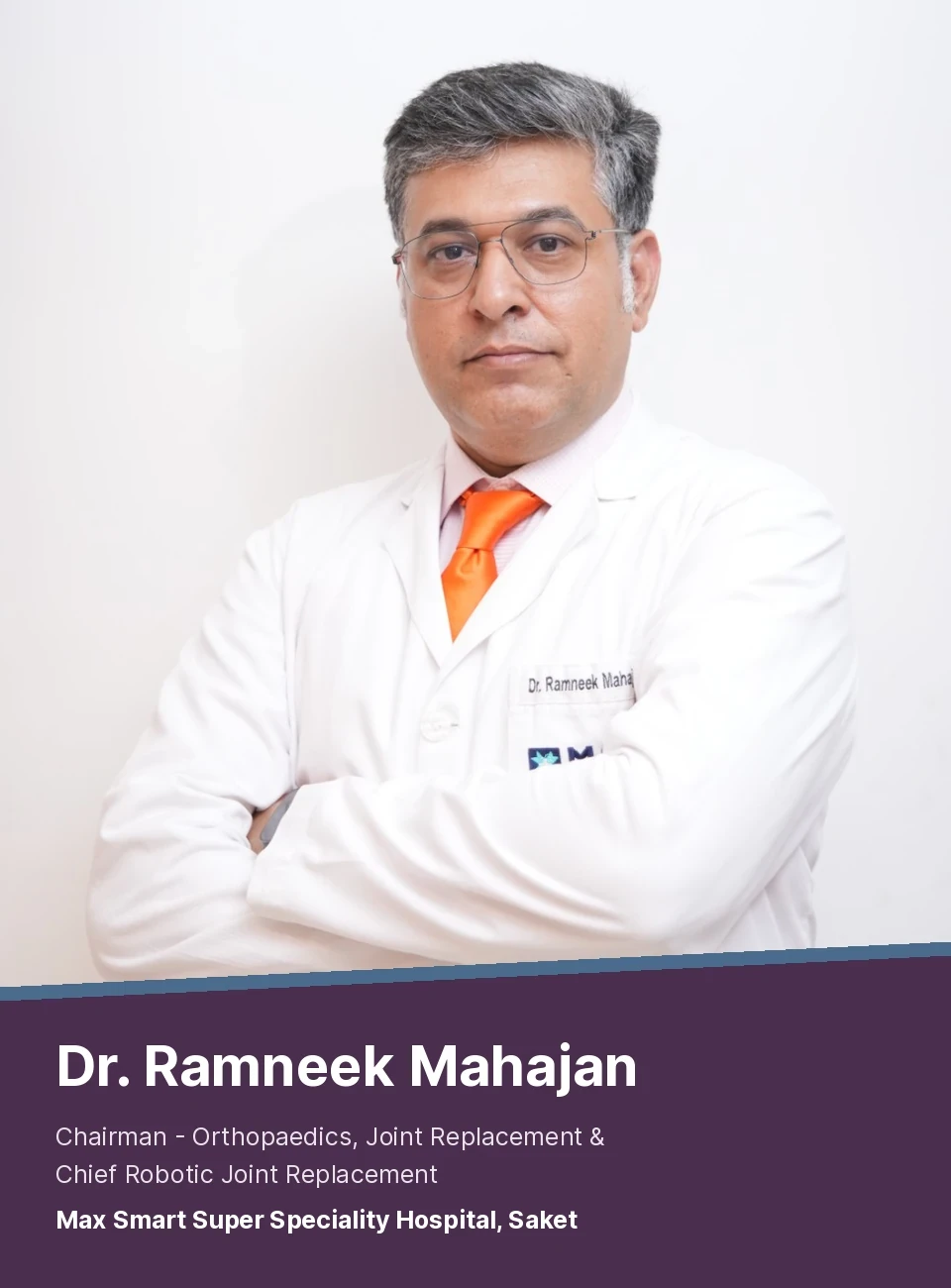
Dr. Mahajan is Chairman Orthopaedics, Joint Replacement & Chief Robotic Joint Replacement at Max Smart Super Speciality Hospital, Saket.
Dr. Mahajan is Chairman Orthopaedics, Joint Replacement & Chief Robotic Joint Replacement at Max Smart Super Speciality Hospital, Saket.

AI generated. Representative only.
AI generated. Representative only.
A woman whose knees had been fixed and bent for a long time needed both replaced by Dr Ramneek Mahajan.
Which operation did the patient need?
Dr Mahajan says the patient was told she would need both knees replaced.
What made the operation harder?
Dr Mahajan says the patient had walked for a long time with her knees bending inward, and they had become fixed that way, with a bend of 30 degrees that would not straighten. Straightening such a knee puts a nerve at risk, and the chance of foot drop, weakness that leaves the front of the foot hanging so that it drags when a person walks, is very high. She was told the operation would take this risk into account: the aim was to correct her knees properly and to keep her from getting any other complications.
How did the patient recover?
Dr Mahajan says that when the patient wanted to get up to go to the toilet, she held a walker and went, and she started moving very early.
What should a patient whose knees bend inward ask?
This is one woman's story, not a promise: what an operation can do for you depends on your own case.
Ask what straightening your knees means for the nerves in your legs.
Ask what will be done to lower the chance of foot drop.
To understand this case better
To understand this case better


What this case teaches
What this case teaches
A knee both bent inward and stuck bent scores higher for the risk of a foot-weakening nerve injury, a 2026 study of 328,314 operations found.
Foot drop can follow a knee replacement; the NHS says it can get better on its own or with treatment, but sometimes stays.
In knock knees, a truly stretched inner ligament needs careful checking and may change how the operation is done, a 2026 review explains.
Related clinical case studies
Related clinical case studies


Related guides
Related guides


Wherever you come, you see him personally.


Next 3 Days
Wherever you come, you see him personally.
Next 3 Days
Wherever you come, you see him personally.
Next 3 Days


Dr. Ramneek Mahajan is Chairman Orthopaedics, Joint Replacement & Chief Robotic Joint Replacement at Max Smart Super Speciality Hospital, Saket. His practice has completed 18,000+ joint replacements and 2,000+ robotic procedures since 2022 - the first MAKO program adopted in Delhi. Senior colleagues refer when their primary work needs revision.




Dr. Ramneek Mahajan is Chairman Orthopaedics, Joint Replacement & Chief Robotic Joint Replacement at Max Smart Super Speciality Hospital, Saket. His practice has completed 18,000+ joint replacements and 2,000+ robotic procedures since 2022 - the first MAKO program adopted in Delhi. Senior colleagues refer when their primary work needs revision.
Dr. Ramneek Mahajan is Chairman Orthopaedics, Joint Replacement & Chief Robotic Joint Replacement at Max Smart Super Speciality Hospital, Saket. His practice has completed 18,000+ joint replacements and 2,000+ robotic procedures since 2022 - the first MAKO program adopted in Delhi. Senior colleagues refer when their primary work needs revision.