Hip conditions · Avascular necrosis
Avascular necrosis is not arthritis
Avascular necrosis means the bone in the ball of your hip is losing its blood supply. Without a steady blood supply, that bone gradually loses its strength. Left alone, the ball can lose its round shape and collapse.
This is different from arthritis. Arthritis is the slow wearing-away of cartilage, usually over many years, mostly in older joints. Avascular necrosis is a blood-supply problem - it can move faster, and it often shows up in people in their 30s and 40s.
That difference matters. It changes what caused it, how quickly it needs attention, and - if it is caught early - whether the hip can still be saved.
1
These red vessels feed the ball of the hip.
2
When their supply is cut off, the bone inside gradually loses its strength.
3
That’s avascular necrosis - a blood-supply problem, not arthritis or worn cartilage.
Arthritis
Cartilage wears away slowly, usually over many years. Mostly in older joints.
Avascular necrosis
The bone loses its blood supply and can collapse. Can move faster. Often in the 30s and 40s.
Why this happens
Why this often happens to younger people
Avascular necrosis frequently affects people in their 30s and 40s - younger than most hip problems. If that is you, you are not alone. We are seeing more of it, not less.
The blood supply to the ball of the hip can be interrupted for a few reasons:
Steroid medication
especially long or high-dose courses
Heavy alcohol use
sustained over time
An earlier hip injury
a fracture or dislocation
Conditions such as sickle cell disease
Sometimes there is no clear cause we can find
and that does not change what happens next
Can you lower the risk?
Some of what drives avascular necrosis is in your hands. Going easy on alcohol, keeping cholesterol in check, and not smoking all help protect the blood supply to your bones. And if you have needed high-dose steroids - for asthma, lupus, or another condition - make sure your doctor knows, because repeated courses add up.
Since COVID, more patients have come to us with it - often after steroid treatment during a serious illness.
Whatever the trigger, the result is the same: the bone in the ball of the hip stops getting the blood it needs. What matters next is how early it is caught.
The decision
The question that decides everything: has the ball collapsed yet?
Avascular necrosis is really two situations, and which one you are in decides what we can do. It moves through four stages, and the line that changes everything is when the ball begins to lose its round shape.
First, how we find out where you are
Avascular necrosis is easy to miss early - an ordinary X-ray often looks normal at that stage. The scan that shows it is an MRI, which can pick it up before it has done much damage, and even before it hurts. Because it is often in both hips - even the one that feels fine - we usually scan both. Left alone it can move over months to years, often faster once it starts to hurt, which is why finding it early matters. Your MRI tells us which of the four stages below you are at - here is what each one looks like.
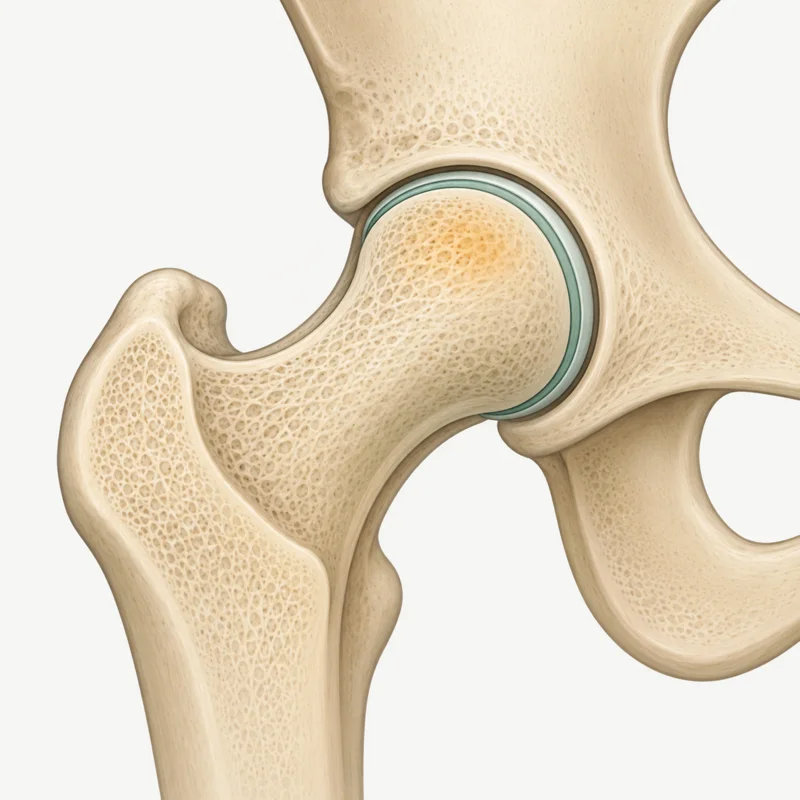
Before collapse
Stage 1
1
The blood supply to the ball is starting to fail.
2
The bone still holds its round shape - often with no pain yet.
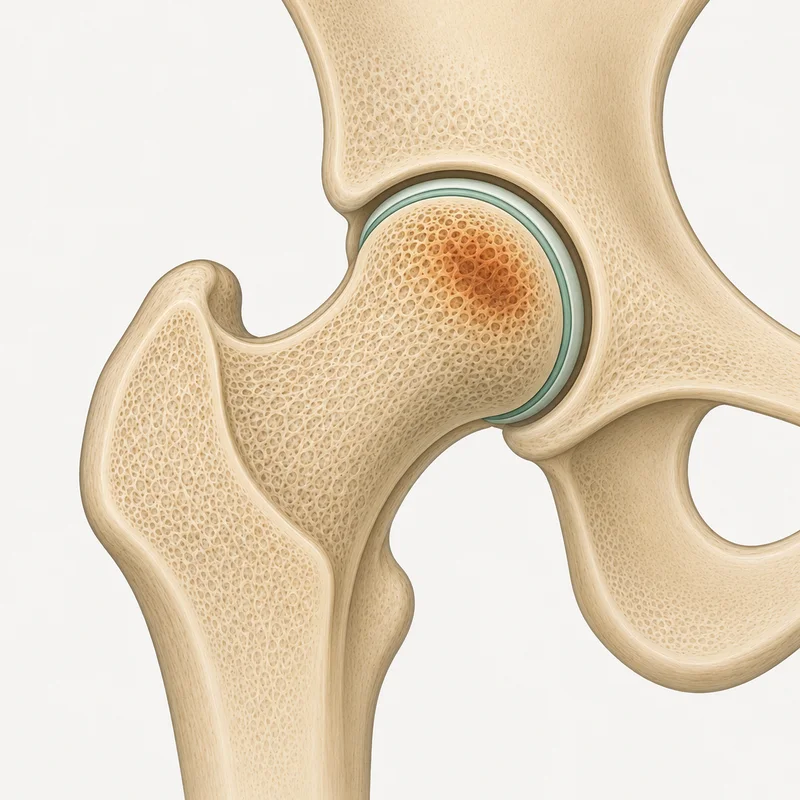
Before collapse
Stage 2
1
The bone is weakening inside, though the ball stays round.
2
There is still a real chance to protect the joint.
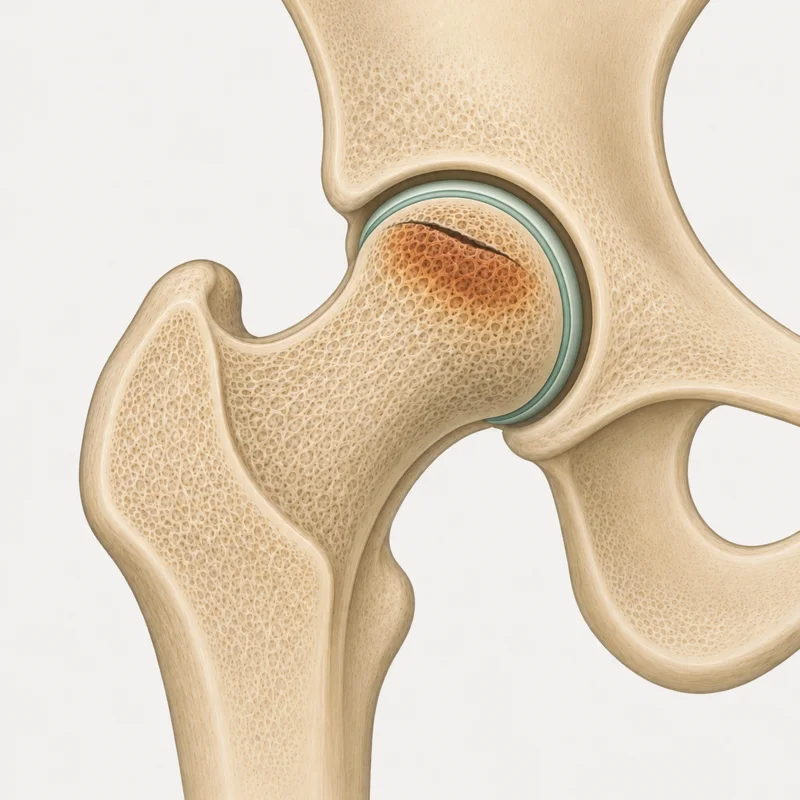
The turning point
Stage 3
1
The surface begins to give way - the first flattening.
2
This is where the decision changes.

After collapse
Stage 4
1
The ball has lost its round shape.
2
The joint is worn now - a hip replacement is usually the answer.
This is why we act quickly with avascular necrosis, more than with arthritis. Before collapse, more of your options are still open. After it, they narrow.
One more thing worth knowing early: avascular necrosis affects both hips in about half of cases. So we check both, even when only one is hurting.
What we do at each stage
Two paths: protect the hip, or rebuild it
What we do depends on where things stand - whether the ball of the hip has kept its shape, or already started to change. The earlier we see you, the more we can do to protect your own hip.
Caught early
Protect the hip you have
First
Take the pressure off - adjusting weight and activity, sometimes crutches for a while - together with medicines that ease pain and help slow the bone loss.
Then
A small procedure called core decompression - one or two fine channels into the ball to release the pressure inside and invite fresh blood flow. Done early, before the shape changes, to give the hip its best chance.
Both work with your own hip - the aim is to protect its shape while the bone recovers.
Once the shape has changed
Rebuild the joint
When the ball has flattened, protecting it usually isn’t enough on its own.
The answer is usually a hip replacement - a new joint in place of the worn one, often with robotic assistance for a precise fit.
If both hips are affected and you are fit for it, they can sometimes be done together.
For most people this settles the pain and gets them moving again.
Some hips sit in between - the affected area is larger, or the surface has only just begun to give way. There we have other joint-preserving options too, such as a bone graft to support the weakened area, or reshaping the bone to shift weight off it. We match the approach to your exact stage and how much bone is involved.
Which path is right depends on the stage and how much of the bone is involved - something we work out together. But the earlier we look, the more doors stay open.
What families ask
The questions younger patients ask us
Avascular necrosis often lands on people in their 30s and 40s - so the worries are different from an older patient’s. These are the ones we hear most, answered straight.
Q.
Will I be back to normal life?
For most people, yes. After a hip replacement the pain settles, and you get back to work, walking, swimming, cycling - a full daily life. The one caution is high-impact activity like running or jumping sports, which we usually suggest easing off, to protect the new joint.
Q.
How long will a hip replacement last?
This is the honest part, and it is why timing matters. Modern hip replacements last many years - but if you are in your 30s or 40s, one is unlikely to last your whole life. Most younger patients can expect to need it redone (a revision) at some point. That is exactly why, when the hip can still be saved, we try to protect your own joint first. And if the ball has already changed shape, a hip replacement is still a reliable way out of the pain and back to moving - we simply plan it knowing you are young, and look after it across your life.
Q.
Both hips, or one at a time?
Avascular necrosis affects both hips in about half of people, so we check both even when only one is hurting. If both need treating and you are fit for it, they can sometimes be done together - otherwise, one at a time. We decide that with you.
Q.
Can I wait and see?
You can, but waiting is not free. Before the ball collapses, acting early keeps the gentler, joint-preserving options open. Once it changes shape, those options close and a replacement becomes the main route. So the timing is your decision - but the condition does not pause while you wait, and delay can quietly narrow your choices.
None of this is decided in one visit. We look at your scans, talk it through, and choose the path together - the earlier we start that conversation, the more of it is still yours to decide.
When to come see us
The sooner we look, the more we can do
Avascular necrosis is quiet early on - which is exactly why timing matters. A simple check now can protect choices you would lose by waiting.
Worth getting checked if -
You have new or lingering hip or groin pain, especially when you put weight on it.
You have a reason to be at higher risk - long or high-dose steroids, heavy alcohol, a past hip injury, or sickle cell.
Pain in one hip hasn’t settled - even if an earlier scan looked normal.
Early on, avascular necrosis often causes little or no pain - so it is easy to wait. But this is the stage where we have the most to offer.
Before the ball loses its shape, we can often protect your own hip. After that, the main route is a replacement. Catching it early is the difference between saving the joint and rebuilding it.