ACL tear: what to know before you consider surgery
Last Reviewed:
11 August, 2026
~12 min read
Reviewed by:
Dr. Ramneek Mahajan
Dr. Mahajan is Chairman Orthopaedics, Joint Replacement & Chief Robotic Joint Replacement at Max Smart Super Speciality Hospital, Saket.
This guide is for an active adult who has torn - or thinks they have torn - an ACL and is weighing what to do next. If you play a pivoting sport, or your knee keeps giving way under you, the surgery question is real and this guide will help you frame it. If you tore it but the knee feels steady in daily life, you have more room to decide than most of the internet suggests.
This guide is not for someone whose main problem is knee arthritis or who needs a knee replacement, and it does not replace an in-person assessment of your knee. Those situations have their own pages on this site.
01 What is an ACL tear?
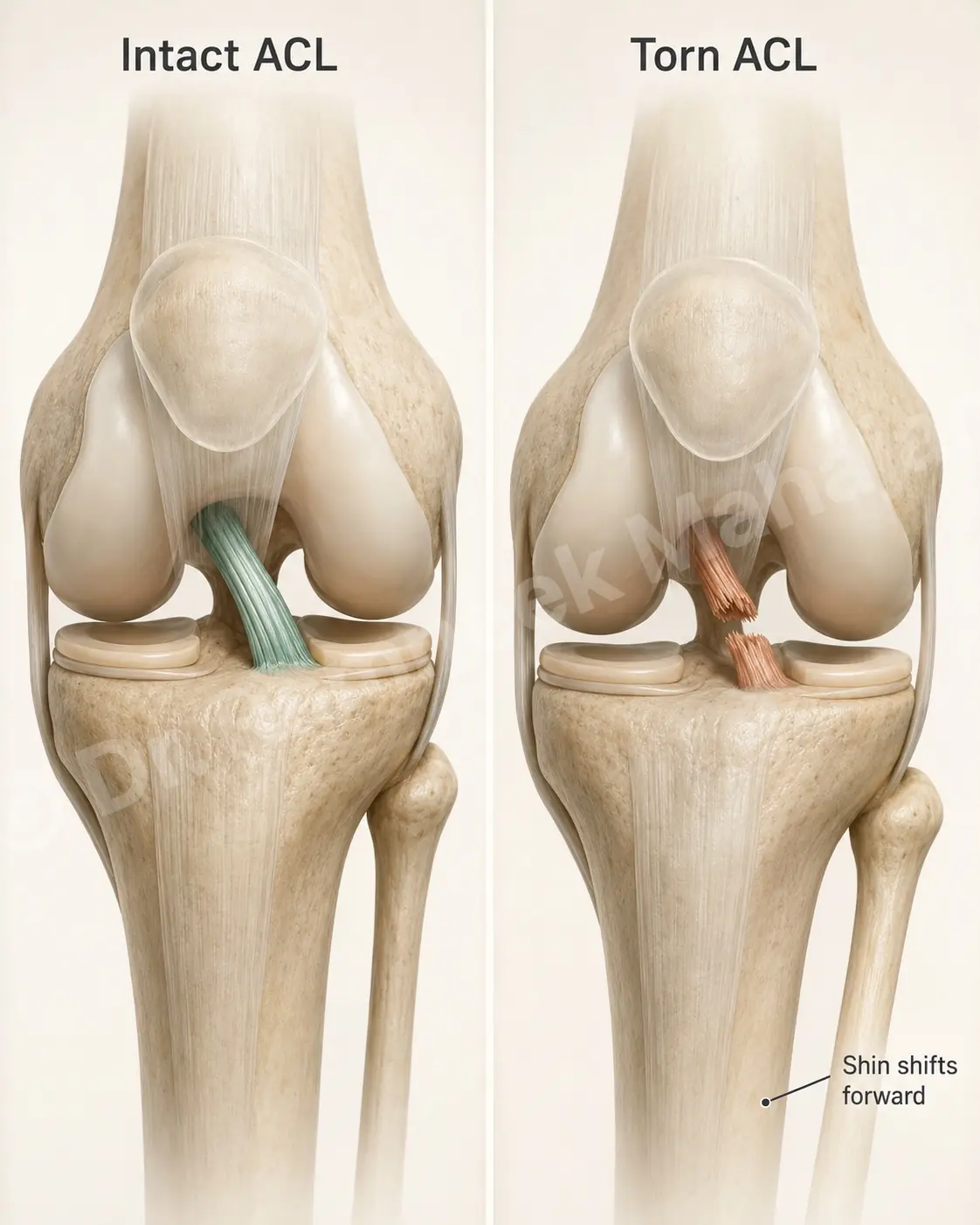
The ACL - the anterior cruciate ligament - is the main internal seatbelt of the knee. It runs through the centre of the joint and stops the shin bone sliding forward on the thigh bone, and it controls the twisting movement when you turn or pivot. It does most of that job on its own: it provides roughly 85 percent of the resistance to the shin sliding forward. When it tears, that seatbelt is gone, and for some people the knee starts to feel like it might give way on a turn.
How do you know it's an ACL tear?
A twisting, landing, or sudden-stop movement - often non-contact, not a tackle
A pop, felt or heard, at the moment of injury
The knee swells within a few hours, not days
A sense that the knee gave way, or might give way again on a turn
Difficulty carrying on with the activity straight afterwards
When that pattern is present, the chance that the ACL is torn is high - over 70 percent in the published series. A clinical examination confirms it: the Lachman test is the most sensitive check a surgeon does for an ACL tear, picking it up in about 95 percent of cases, and an MRI scan confirms the tear and shows whether the meniscus or cartilage was injured at the same time.
When should you see a doctor quickly?
Any knee that pops and swells fast after a twist is worth getting checked. Get seen promptly if:
The knee locks or cannot be fully straightened - a sign a piece of torn meniscus may be caught in the joint
The knee gives way repeatedly, so it feels unsafe to walk or take stairs
There is large, immediate swelling and you cannot bear weight
Are all ACL tears the same?
No, and the difference matters for the decision:
A partial tear leaves some fibres intact and can leave the knee stable enough to manage without surgery.
A complete tear cuts the seatbelt fully - this is the one that tends to give way on a turn.
Many ACL injuries come with company - a meniscus tear or a torn inner ligament (MCL) at the same time. A combined injury is less stable and can change the plan.
Does an ACL tear heal on its own?
A fully torn ACL does not reliably heal back into a working ligament. That sounds like bad news, but it is not the whole story. The real question is not whether the ligament grows back - it is whether your knee works well enough without it. For a large share of people, it does. That is what the rest of this guide is about.
Who is most likely to tear an ACL?
People who play cutting and pivoting sports - football, basketball, kabaddi, skiing
Women, who tear the ACL around three times more often than men in the same sports, partly due to landing mechanics and anatomy
Anyone who has torn an ACL before - the risk of tearing it again, or tearing the other knee, is higher
The active 15 to 45 age group, simply because they play the sports that cause it
Can you lower the risk of an ACL tear?
You cannot make a knee tear-proof, but the risk can be reduced - and this is most clearly shown in young, especially female, athletes. Structured neuromuscular training - jump-landing technique, balance, and leg strengthening, done more than once a week over at least six weeks - lowers the rate of non-contact ACL injuries. Learning to land and change direction with the knee under control is the core of it.
So if the ligament does not grow back, what are the actual choices?
02 Do you need surgery for an ACL tear?
An ACL tear has two real paths: structured rehabilitation, or reconstruction surgery. Surgery is one path. It is not the automatic answer, and the honest evidence does not treat it as one.
Path | What it is | When it tends to work | What it asks of you |
|---|---|---|---|
Structured rehabilitation (non-surgical) | A guided strengthening programme - quadriceps, hamstrings, balance, neuromuscular control - plus some change to high-pivot activity | The knee is stable in daily life; you are not set on returning to cutting and pivoting sport; you respond well over about three months | Consistent rehab work; honesty about which activities you will adjust |
ACL reconstruction (surgery) | A keyhole operation that replaces the torn ligament with a graft (usually your own hamstring or patellar tendon) | The knee keeps giving way; you want to return to pivoting or contact sport; rehab has not settled the instability | A graft, a recovery of several months, and a rehab commitment either way |
Do you actually need surgery? Who does, and who does well without it?
This is the question most pages skip. The honest answer from the published evidence: many people do well without reconstruction. In one of the most-cited long-term series of people with unstable knees, about 6 in 10 managed their ACL injury without reconstruction. A smaller group needed surgery early, and another group came to it later.
Three things, known early, point towards needing surgery:
Younger age with years of active sport ahead
High pre-injury sports participation - especially cutting and pivoting sports
More instability - a knee that gives way repeatedly, not just once
If none of those is strongly true for you, structured rehabilitation is a legitimate first choice, not a delay tactic. If all three are true, reconstruction is the more likely answer. Most people are somewhere in between - which is exactly why this is a conversation, not a formula.
Can I try rehab first and decide on surgery later?
Often, yes - and the evidence supports it. When people are sorted by how well they respond to about three months of structured rehabilitation, and only those with persistent instability go on to surgery, the long-term knee-arthritis picture at 20 years is no different from operating on everyone early. So a rehab-first trial is a reasonable, evidence-backed plan for many.
The honest caveat: "wait and see" is not the same as "ignore it." If your knee keeps giving way and you delay reconstruction while staying active on it, those repeated give-way episodes can injure the meniscus and cartilage over time - and that secondary damage matters more for the knee's future than the ACL tear itself. The plan is active rehab with a clear review point, not drift.
If the conversation does point towards surgery, here is what it actually involves.
03 What happens during ACL reconstruction?
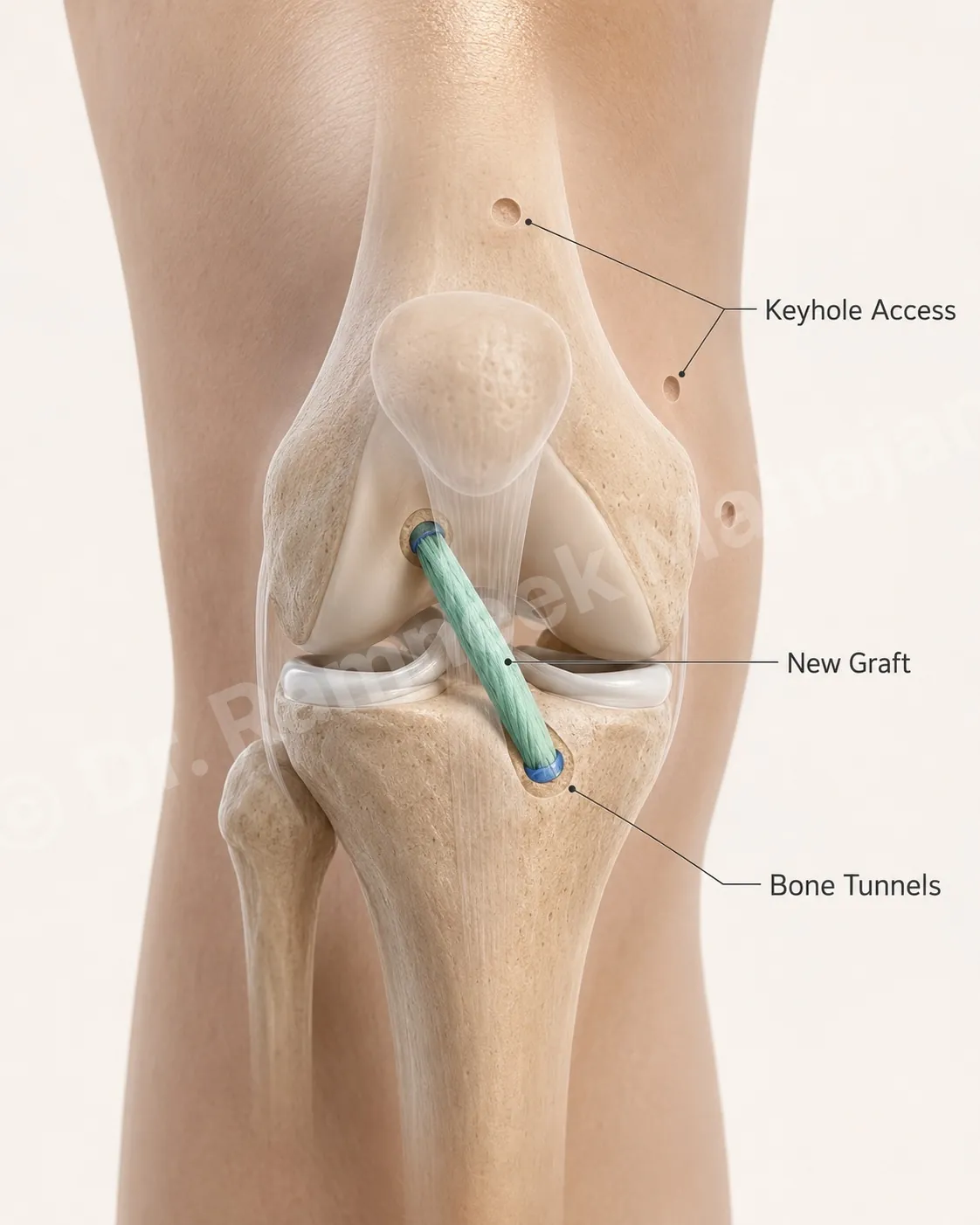
ACL reconstruction is keyhole (arthroscopic) surgery. The surgeon does not stitch the torn ligament back together - that does not hold. Instead the torn ligament is replaced with a graft, which over months becomes the knee's new ACL. It is usually done once the early swelling has settled and the knee has regained its movement, not in the panic of the first week.
What are the graft choices?
A graft is a strong band of your own tendon used to rebuild the ligament. The two common choices are a hamstring tendon graft and a patellar tendon graft, both taken from your own knee. Each has trade-offs your surgeon will talk through. The reassuring part: in the published evidence, the type of graft is not the main thing that decides whether you do well - the surgery being done properly and the rehab being followed matter more.
Will I be admitted, and for how long?
ACL reconstruction is typically a day-care procedure or a single overnight stay - in the published surgical literature it is described as outpatient or 23-hour admission. Most patients go home walking with crutches and a brace rather than being confined to bed. The exact plan for your case will be discussed during your consultation.
The operation is the short part. Recovery is where the real work is - and it is the same truth whether you have surgery or not.
04 When can you return to sport after ACL surgery?
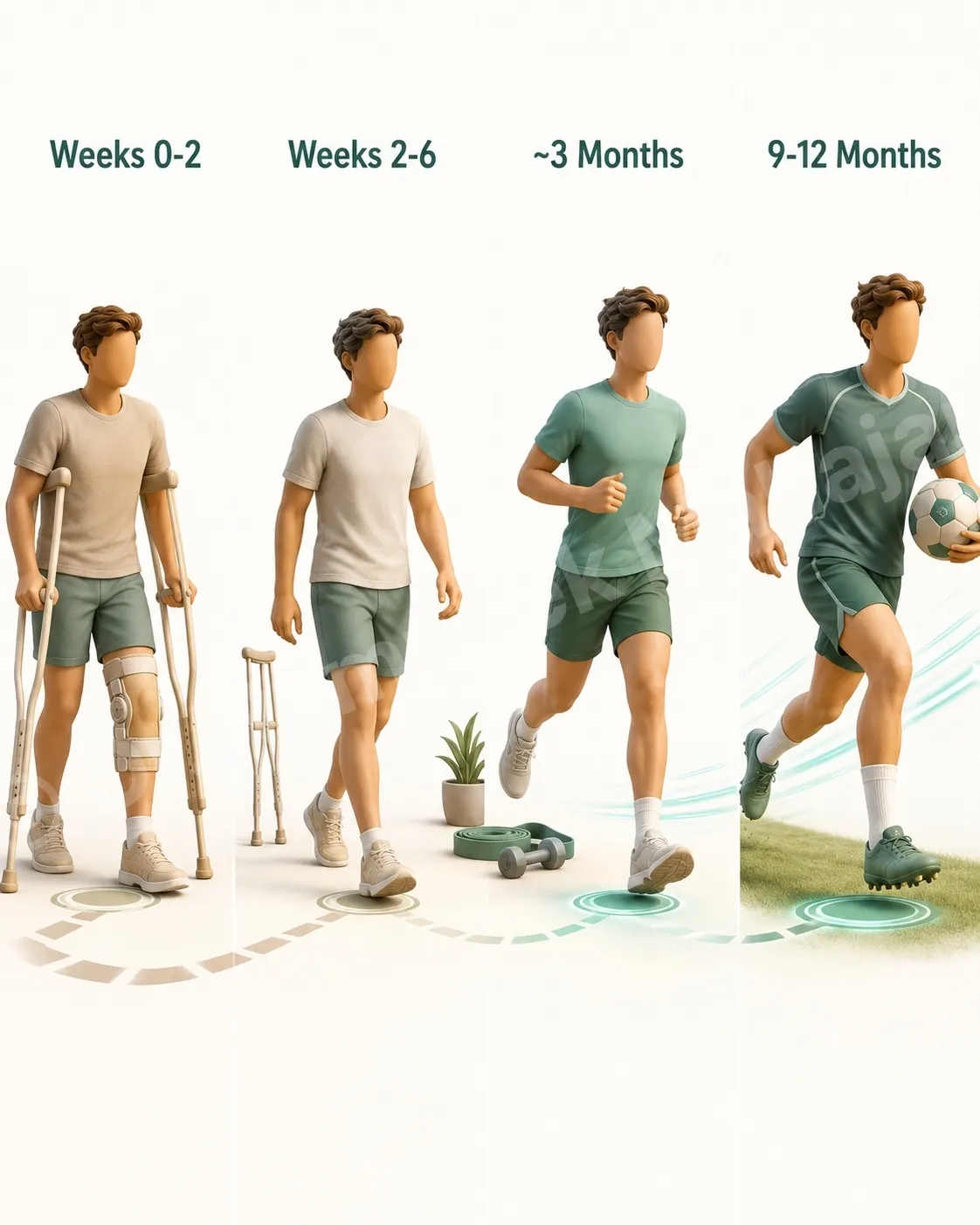
Recovery after ACL reconstruction follows a phased arc, and it is measured in months, not weeks. The early phase protects the new graft and gets full movement back; the middle phase rebuilds strength; the final phase retrains the knee for sport. Rushing any phase is the single biggest avoidable risk.
The recovery phases, in plain terms
First days: the priority is getting the knee fully straight again and the thigh muscle firing. Crutches and a brace; movement starts early.
Weeks 2 to 6: movement and weight-bearing build up; the limp settles; everyday walking returns.
Around 3 months: straight-line jogging and sport-specific strengthening begin, once the knee has the strength and control for it.
6 months and beyond: a graded return towards sport - non-pivoting first, then pivoting, then contact - usually from 6 months at the earliest, and often 8 to 9 months for pivoting contact sport.
Return to sport is decided by tests, not the calendar.
Before returning to sport, surgeons look for the operated leg reaching roughly 80 percent of the other leg's thigh strength, and passing hop tests at about 85 percent of the other side - alongside a minimum of six months. Going back on the calendar alone, before the knee passes these checks, is the most common reason a graft re-tears.
If you are not having surgery, what does rehab look like?
The non-surgical path is not "do nothing." It is an active, structured strengthening programme - the quadriceps and hamstrings take over some of the stabilising job the ligament used to do, and balance and control work retrains the knee. For the right person, this is genuine treatment, not a holding pattern. The rehab is much of the reason the no-surgery group does as well as it does.
If you do choose surgery, the next question is who should do it.
05 How do you choose a surgeon for an ACL tear?
Choosing a surgeon for an ACL tear comes down to four checks. The four below are what actually matter.
Arthroscopic and sports-knee experience. ACL reconstruction is keyhole surgery; you want a surgeon who does arthroscopic knee work regularly.
Honest counsel on whether you even need surgery. The right surgeon will tell you plainly if structured rehab is the better first step for you - and will not push an operation you may not need.
Rehabilitation and physiotherapy support. The result depends as much on the months of rehab as on the hour of surgery. Ask what physiotherapy support the practice provides.
Follow-up. A surgeon who reviews you through the recovery, not just at discharge, is tracking the outcome that matters - your return to activity.
For context
Dr Ramneek Mahajan performs arthroscopic ACL reconstruction at Max SMART Saket, alongside a high-volume joint-replacement practice. He is an orthopaedic surgeon and a senior consultant at the hospital, with international fellowship training. The point of this page is not to push surgery - it is to help you work out whether you need it, and to be clear that if you do, this is surgery the practice performs.
Every patient is personally assessed by Dr Ramneek, even when seen by the team - this may add to OPD waiting times, but ensures the doctor's direct evaluation in your case.
A question that sits behind the decision for many people: what does this cost?
06 How much does ACL treatment cost?
The cost of treating an ACL tear depends on the path. Structured rehabilitation is a course of physiotherapy over months. Reconstruction depends on the graft, the type of hospital, and your specific situation. There is no single figure that would be honest across those variables.
One honest point is worth making here: for some people the lower-cost path is also the clinically reasonable one. If your knee is stable in daily life and you are not returning to pivoting sport, structured rehab can be both the right first step and the less expensive one. That is a real part of the conversation, not an afterthought.
For a specific figure - what insurance covers, graft and hospital options - the team works through it at or after the first consultation. That is the right setting for those numbers, not a webpage.
Before deciding, an honest look at what surgery can and cannot promise.
07 Does ACL surgery work, and what can go wrong?
ACL reconstruction is a well-established operation that works for most people who need it. It is not a guarantee, and an honest page says so plainly. Here is what the published evidence shows, in ranges, not promises.
The risks, with honest numbers
Overall complications are low. In a large series of nearly 5,000 reconstructions, major complications occurred in about 0.55 percent and minor ones in about 0.87 percent. The most common single problem was a clot in a leg vein (about 0.55 percent); deep infection was rare (about 0.14 percent).
Diabetes raises the infection risk markedly, which is why blood-sugar control before surgery matters.
Re-tear is the real risk to respect. Across the evidence, graft failure or the need for revision sits in a 10 to 25 percent range. In young athletes who return to high-risk sport, roughly 1 in 4 will tear an ACL again - the same knee or the other one - and early return is the biggest avoidable reason.
Reconstruction works for most. It is not a guarantee - here is the honest version
Surgery does not fully prevent arthritis. In a matched comparison, about 42 percent of reconstructed knees showed osteoarthritis at long-term follow-up, against about 25 percent of those treated without surgery. Reconstruction restores stability; it does not restore a fully normal knee. Arthritis can develop on either path - which is honest, and worth knowing before you choose.
Returning to your exact sport is not certain. In a large review of nearly 6,000 patients, about 44 percent returned to competitive sport, even though around 90 percent had normal or near-normal knee function on testing. You will often read "98 percent return to sport" online; the honest, evidence-based number is more sobering, and setting that expectation now is part of an honest decision.
None of this is a reason to avoid surgery when you need it. It is the reason to be sure you need it - and to go in with a real picture, not a sales pitch.
Numbers are one thing. Here is what the path has looked like for people in the same position.
Real outcomes from real patients
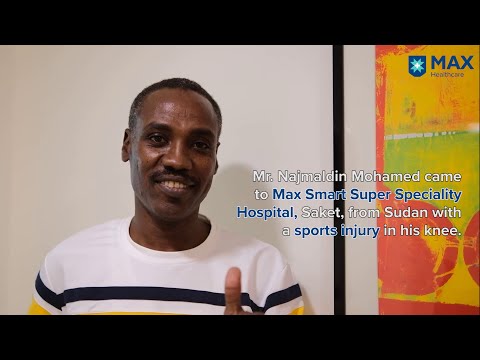
These videos are published on Max Healthcare's official YouTube channel. Each patient's experience is unique - outcomes depend on individual health, disease characteristics, and clinical factors. These accounts are not a guarantee of results.
Frequently Asked Questions (FAQs)
This guide was written and clinically reviewed by Dr Ramneek Mahajan - an orthopaedic surgeon at Max Smart Super Speciality Hospital, Saket, New Delhi. He performs arthroscopic knee surgery, including ACL reconstruction, alongside a high-volume joint-replacement practice, and holds international fellowship training.
For the full credentials record - fellowships, society roles, publications - see the credentials page.
For press coverage and media features, see In the news.
Meet Your Surgeon
Can I safely wait?
The questions worth asking before you decide - and when waiting is the right call, and when it is not.
Before we meet
→
What should I expect, step by step?
The whole path, stage by stage - getting ready, the day itself, recovery, physio, life after.
Patient journey
→
Where did he train?
Fellowships, years in practice, and international experience
Credentials and experience
→






Powered by RAiZEN · Built in India, for the world · © 2026 RAiZEN
Go to RAiZEN website